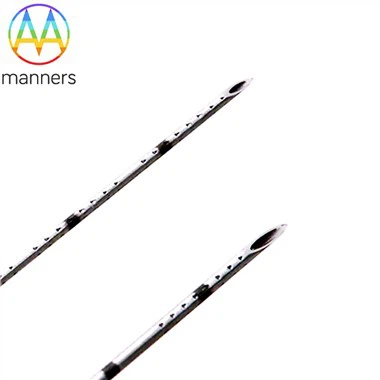
Custom Anesthesia Needles: From Drawing To Procedure
Oct 18, 2026
The Catalogue's Blind Spot
Standard anesthesia needles serve the average patient with admirable efficiency-until the patient is not average. The very large patient whose tissue depth exceeds the standard length, the paediatric case that needs a finer gauge, the spinal deformity that demands a different approach angle, the service that has developed a technique the catalogue does not serve. The pain point is the gap between the standard set and real anatomy. The solution is custom manufacturing: the same 2D/3D drawing and sample-based workflow that drives precision manufacturing across industry, applied to the disposable anesthesia puncture needle. The standard catalogue serves the average; the custom needle serves the individual, and the individual is where clinical excellence lives.
How Custom Needle Manufacturing Works
Custom manufacturing begins with specification and ends with a validated product. The clinician or procurement team provides a 2D drawing, a 3D model, or a physical sample that defines the required geometry: gauge, length, point type, bevel configuration, hub design, and surface finish. The manufacturer translates the specification into a production plan, using CNC grinding and automated finishing to hold tolerances beyond hand work. Material selection follows the specification-medical-grade stainless steel or NiTi alloy, chosen for the intended clinical behaviour-and heat treatment is tuned to the required hardness and flexibility. The production process mirrors the standard workflow: material selection, precision machining, heat treatment, surface finishing, quality control, and sterilization validation. The difference is purpose: every dimension has been specified for a clinical need rather than accepted from a catalogue. The result is a needle that fits the clinician's technique, the patient's anatomy, and the procedure's demands with a precision that transforms the outcome.
Classifying Custom Opportunities
Custom manufacturing serves distinct needs, and recognizing them sharpens the specification. Dimensional customization-length beyond standard, gauge variations, taper adjustments-addresses anatomical variation: a longer needle for deep landmarks, a finer gauge for paediatric or high-risk patients. Geometric customization-point angles, bevel shapes, port positions-refines the puncture experience and the drug-delivery profile for specific techniques and populations. Material customization-alloy selection, coatings, surface treatments-adds flexibility, lubricity, or biocompatibility to the base design. Functional customization-hub styles, connection types, safety features-integrates the needle into the service's workflow and safety architecture. Each type solves a different constraint, and the service that can articulate which constraint it is solving will get a better product.
Practical Specification Guide
The specification process is a collaboration, not a purchase. Start with a clear statement of the problem: "Our standard 90 mm needles are too short for our bariatric population" or "Our spinal technique needs a port position that flows faster." Translate the problem into dimensions: measure the required length from imaging or clinical experience, define the gauge, specify the point design, and provide reference materials-drawings, photos, or the physical sample that currently falls short. Review the manufacturer's capability statement before committing: confirm they can hold the tolerances you need, that their sterilization validation covers your requirements, and that they will provide material certification with each batch. Order a small trial batch, test it across your procedures, and refine the specification based on real performance. Document the final specification as your department standard, and re-order from the controlled specification to maintain consistency. The process requires effort, but the result is an instrument that is yours-designed for your patients, your techniques, and your standards.
Lessons from Custom Pioneers
Services that embraced custom manufacturing report improvements that justify the effort. An obstetric anesthesia unit that specified finer-gauge atraumatic needles for its adolescent patients reported reduced post-dural puncture headache and faster recovery, with patients returning to normal activity sooner. A bariatric surgery service that ordered longer custom needles eliminated the awkward angled attempts that had characterized difficult cases, reducing failed blocks and clinician frustration. A regional anesthesia practice that co-designed a modified bevel with its manufacturer found that block quality improved, as the geometry matched its ultrasound-guided technique. The pattern is consistent: the service that specifies its instruments stops adapting to the catalogue and starts directing it. The custom needle is not a luxury-it is a standard of care waiting to be claimed.
The Craft of Specification
Custom manufacturing is a professional act, not a procurement shortcut. The service that specifies a needle is declaring what it knows: about its patient population, its techniques, its outcomes, and the gaps between its instruments and its goals. That declaration is the highest form of clinical authorship, and it produces instruments that carry the service's knowledge into every procedure. The disposable anesthesia puncture needle, designed to order, is proof that the instrument serves the craft-not the other way around. Every custom order is a small declaration of excellence, and the services that make them are the services that practice with intent.
The Future of Custom Anesthesia Needles
Digital manufacturing is making custom work faster, cheaper, and more accessible. Direct digital fabrication from 3D models will allow services to iterate designs in days rather than weeks. AI-assisted design tools will suggest geometry optimizations based on outcome databases, learning which specifications produce the best blocks. Patient-specific needles, designed from imaging data, are on the horizon-instruments that match the anatomy of the individual before the procedure begins. The 2D/3D drawing workflow that already drives custom orders will become the default pathway for precision instruments. Forward-looking services should build manufacturing partnerships now, develop specification literacy, and treat the custom instrument as a strategic asset. The future belongs to clinicians who can imagine the needle they need-and then hold it in their hand.