Cost-Effectiveness Analysis Of Consumable Selection in Breast Core Needle Biopsy Procedures And Interpretation Of Medical Insurance Policies
Jul 16, 2026
https://www.mayoclinic.org/tests-procedures/breast-biopsy/about/pac-20384812
In today's increasingly strained healthcare environment, cost-effectiveness analysis of breast biopsy procedures has become a topic of concern for hospital administrators, health insurance policymakers, and patients alike. As a core consumable, biopsy needles vary widely in price-from disposable plastic needles costing just a few yuan to imported vacuum-assisted biopsy kits priced at several thousand yuan. How can we achieve optimal resource allocation while maintaining diagnostic quality? This article provides an in-depth economic analysis.
Composition of Consumable Costs
The cost of consumables for breast core needle biopsy procedures mainly consists of the following components:
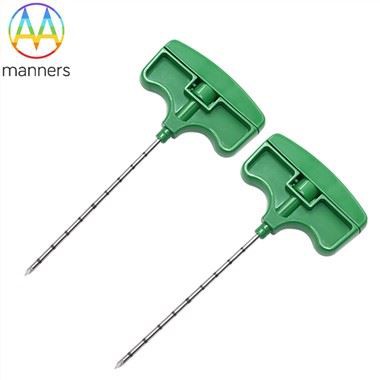
- 1. Biopsy needles themselves: Reusable stainless steel needles have a low unit price but require additional costs for cleaning, disinfection, sterilization, and replacement; disposable polymer or titanium alloy needles are more expensive per unit but eliminate the need for these processes.
- 2. Associated equipment: Automatic biopsy guns (reusable or disposable), vacuum-assisted biopsy units, and disposable cutting kits.
- 3. Imaging guidance fees: Costs associated with ultrasound, mammography, or MRI.
- 4. Labor and time costs: Physician's operating time, nursing support, and equipment turnover efficiency.
- Disposable vs. Reusable: Life Cycle Cost (LCC) Analysis
- Traditional views suggest that reusing instruments is more cost-effective, but life-cycle cost analysis often overturns this conclusion.
* Reusable stainless steel needles: Although the purchase price is low, each use requires multiple steps including pre-treatment, cleaning, rinsing, disinfection, drying, inspection and maintenance, packaging, sterilization, and storage. Calculations suggest that the processing cost per needle can reach several dozen yuan, requiring dedicated personnel and equipment at a Central Sterile Supply Department (CSSD). Moreover, increased tissue damage due to needle tip wear and infection risks from failed sterilization represent significant hidden costs.
* Disposable needles: The highest upfront cost, but zero processing cost and no risk of cross-infection, with consistent performance (uniform sharpness). For departments with high patient volumes and rapid turnover, disposable needles significantly improve work efficiency and indirectly reduce labor costs.
Cost-effectiveness of different needle specifications
* Coarse needle (14G/11G): Although the single-use cost is higher, it offers high diagnostic accuracy and reduces the rate of repeat biopsies due to insufficient sampling. For lesions classified as BI-RADS 4 or higher, using a coarse needle is often the most cost-effective option for achieving a definitive diagnosis in one procedure.
* Fine needle (20G/22G): Lower in cost but with a higher false-negative rate. If missed diagnoses lead to delayed treatment, subsequent treatment costs-such as surgery, chemotherapy, and radiation therapy-can increase exponentially. Therefore, fine needles are recommended only for specific low-risk scenarios or as an initial screening tool.
Impact of Medical Insurance Policies
In China, the reimbursement rates and coverage for breast biopsy procedures vary significantly across different regions due to differences in medical insurance policies.
* Pay-per-procedure: In some regions, disposable items such as biopsy needles and biopsy guns are priced and charged separately. This may incentivize hospitals to use higher-cost consumables to increase revenue, but also encourages manufacturers to compete on price reductions.
* Bundled payment/DRGs: As reforms in medical insurance payment models deepen, diagnosis-related group (DRG) reimbursement is becoming increasingly widespread. Under this model, hospitals must deliver care within a fixed reimbursement amount. This compels hospitals to select the most cost-effective combination of consumables-for example, prioritizing high-quality domestic biopsy needles while maintaining quality standards, or optimizing procedures to reduce waste.
* Centralized procurement policies: Nationally organized centralized bulk procurement for high-value medical devices (such as certain biopsy needles included in local procurement programs) has significantly lowered acquisition costs, reduced patient burden, and freed up profit margins for hospitals.
Patient Payment Willingness and Value-Based Healthcare
In addition to direct costs, patient willingness to pay and the concept of value-based care must also be considered. Younger women may opt to self-pay for more expensive vacuum-assisted biopsies to minimize scarring, while patients facing financial hardship require careful assessment of benefits and risks, with recommendations focused on the most basic and appropriate treatment options. Value-based care emphasizes achieving the greatest health outcomes-such as survival rates, quality of life, and patient satisfaction-at the lowest possible cost.
Conclusion and Recommendations
From an economic perspective, the selection of consumables for breast biopsy procedures should not be based solely on unit price, but rather on a comprehensive evaluation.
- 1. Clinical necessity: Select the most appropriate needle specifications based on lesion characteristics.
- 2. Hidden costs: Include infection risks, repeat biopsy rates, and equipment maintenance expenses.
- 3. Policy guidance: Keep pace with medical insurance payment reforms and adapt to routine centralized procurement.
- 4. Patient benefit: Respect patients' right to choose within the framework of compliance.
In the future, as the quality of domestically produced medical devices improves and healthcare insurance policies continue to evolve, breast needle biopsy procedures are expected to achieve the goal of affordable, high-quality care for all. Healthcare institutions should establish scientific mechanisms for selecting medical supplies and conduct regular cost-effectiveness audits to ensure that every dollar of insurance funds is spent wisely.