Core Of Precision: The Central Role Of AVF Needle Assembly Machines In Automated Precision Manufacturing
Jun 04, 2026
https://www.kidney.org/sites/default/files/Fistula%20Bulletin.pdf
Within the industrial chain for arteriovenous fistula (AVF) cannulation needles for hemodialysis, the assembly machine is far more than a downstream integration device; it functions as the central nervous system and final inspector that transforms ultra-precision components into qualified, dependable medical devices. Its pivotal status hinges on absolute mastery over microscopic dimensional accuracy, sterility assurance and uniform production consistency.
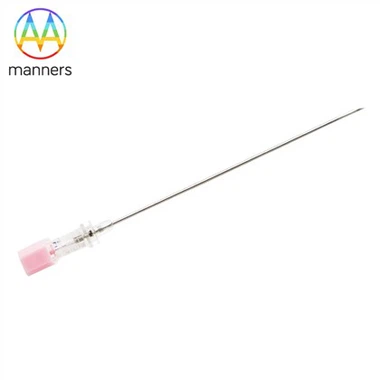
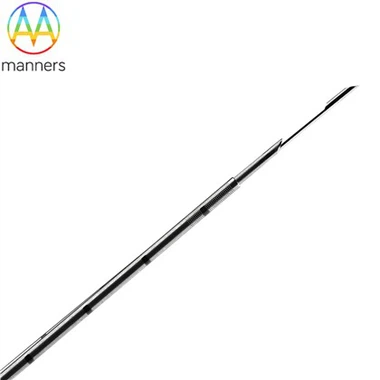
First and foremost, the assembly machine is the linchpin for automating micron-level precision assembly. Core AVF needle constituents encompass stainless steel cannula (typically 304 or 316L stainless steel with hardness ranging from HRC 30 to 40, inner and outer diameter tolerances confined within ±0.01 mm), needle hubs and protective caps. Manual assembly can scarcely deliver damage-free, high-precision alignment and crimping for such miniature parts (e.g., standard overall length of 23.84 mm). State-of-the-art AVF needle assembly equipment integrates high-resolution optical alignment systems, micro-force sensing crimping units and high-precision motion control modules. It outperforms manual labor drastically in geometric precision by guaranteeing concentricity between tubing and hub, alongside consistent crimp penetration depth and compression force. During assembly, real-time acquisition and feedback of crimp force curves enable the machine to validate every joint against predefined mechanical specifications. This prevents lumen deformation and occlusion from excessive crimp load, as well as fluid leakage or component detachment stemming from insufficient compression - an essential prerequisite to sustain intact bonding under high-volume blood perfusion up to several hundred milliliters per minute during dialysis.
Secondly, the assembly machine serves as a core checkpoint for production environmental regulation and in-process aseptic control. Class III invasive medical devices such as AVF needles mandate assembly inside rigorously controlled cleanrooms of Class 10,000 or superior cleanliness grade. Modern assembly machines feature fully enclosed or laminar-flow shielded modules designed for seamless integration into cleanroom infrastructure, drastically minimizing particulate and microbial contamination triggered by human handling. Furthermore, assembly workflows are configured as continuous, fully or semi-enclosed production lines. After upstream electrolytic polishing and ultrasonic cleansing, individual components are automatically picked, aligned and fitted by automated machinery under controlled clean conditions before immediate packaging. Such workflow design sharply cuts open-air exposure duration of semi-finished goods and inherently restricts initial bioburden levels throughout fabrication.
Thirdly, automated assembly equipment underpins large-batch production uniformity and full quality traceability. Long-term repetitive clinical application of AVF needles by hemodialysis patients places stringent requirements on consistent performance across production lots. Program-driven full automation eliminates human operational discrepancies and fatigue-induced dimensional deviations, ensuring every needle is fabricated following identical process parameters. Additionally, contemporary assembly machines interface with Manufacturing Execution Systems (MES) to log critical production metadata for individual units or whole batches: crimp force readings, visual inspection snapshots, assembly timestamps and component lot numbers. These digital production archives enable rapid, pinpoint backward tracing to specific process phases and raw material lots in the event of post-market adverse incidents, upgrading quality management from discrete in-process supervision to full-lifecycle traceable governance.
In conclusion, the AVF needle assembly machine is never a mere component-fitting fixture. It acts as the vital intermediate link bridging precision machining (five-axis laser grooving, tip grinding etc.) and final sterile finished goods, functioning as the technical hub securing superior hydraulic performance from precision-engineered flow slots, robust mechanical integrity via controlled crimping, and top-tier safety standards through cleanroom assembly and digital traceability. The degree of automation, precision and digital informatization of such equipment directly defines the quality ceiling and maximum production capacity of premium-grade AVF cannulation needles.