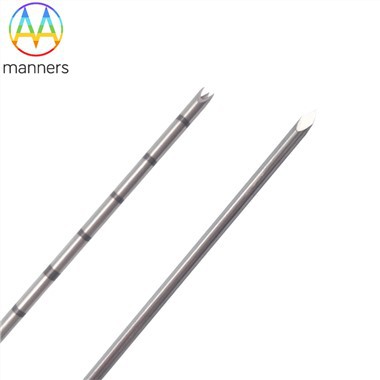
Core Material Selection Standards For Bone Marrow Aspiration Biopsy Puncture Needle Manufacturers
Jul 24, 2026
As high-precision minimally invasive interventional medical devices, bone marrow aspiration biopsy puncture needles directly rely on material performance to guarantee clinical safety, durability and applicability. Material selection stands as a core research and production priority for qualified manufacturers. At present, mainstream manufacturers in the industry adopt 304 and 316 medical stainless steel as primary raw materials. Featuring outstanding biocompatibility, corrosion resistance and mechanical properties, these two materials serve as standard raw materials for bone marrow aspiration biopsy puncture needles and lay a fundamental foundation for safe clinical puncture procedures. Professional manufacturers implement strict access criteria for material selection, which ordinary industrial stainless steel cannot satisfy. The whole production process complies with specifications for Class III medical devices, so quality is controlled from the very beginning.
304 medical stainless steel is the commonly used basic material for such puncture needles. It delivers favorable toughness and tensile resistance, maintains shape after machining and fits mechanical requirements of routine bone marrow puncture surgeries. The material resists acid and alkali corrosion and oxidation. It will not release harmful substances during minimally invasive human intervention, featuring non-cytotoxicity and low sensitization, suitable for routine bone marrow sampling on adult patients. 316 medical stainless steel is an upgraded premium material containing molybdenum elements, which greatly enhances corrosion resistance and high-temperature tolerance. It can withstand ethylene oxide sterilization and repeated high-temperature and high-pressure sterilization. Its stronger resistance to body fluid erosion makes it ideal for immunocompromised patients and scenarios requiring repeated clinical testing, effectively preventing infection and instrument jamming caused by material corrosion.
Professional bone marrow aspiration biopsy puncture needle manufacturers allocate suitable materials for different product models according to application scenarios. Mass-produced standard products mostly adopt 304 stainless steel to balance cost performance and practicality, while customized premium models and products for special patient groups prefer 316 stainless steel. Before incoming storage, raw materials go through multiple quality inspections including spectrum analysis, impurity screening and hardness testing to block inferior steel from production. Different from ordinary puncture needles, bone marrow aspiration biopsy puncture needles impose extremely strict requirements on material flatness and surface smoothness. Inferior materials tend to form burrs on needle tips and rough inner walls, which will damage bone marrow tissue, bring severe pain to patients, trigger sample contamination and lead to sampling failure.
In addition, manufacturers conduct secondary optimization on stainless steel materials by adopting polishing, electropolishing and other precision machining technologies to eliminate tiny scratches and pores on material surfaces and achieve mirror-level smoothness on both inner and outer walls of needle tubes. This technology lowers puncture friction, alleviates patients' intraoperative pain, avoids tissue adhesion and sample residue, and improves sampling accuracy. In terms of industry compliance, raw stainless steel materials used by formal manufacturers come with complete medical material certification, fully meeting biosafety standards for medical devices. Every bone marrow aspiration biopsy puncture needle satisfies clinical requirements of hematology and pathology departments in hospitals at all levels, offering safe and reliable instrument support for the diagnosis of hematological diseases and bone marrow pathological testing.
With refined development of the medical industry, higher standards for patients' treatment comfort and surgical safety are continuously proposed. Bone marrow aspiration biopsy puncture needle manufacturers keep optimizing material selection systems. While sticking to 304 and 316 stainless steel as core raw materials, they refine material grading standards and optimize material toughness and precision targeting children, the elderly and critically ill patients of special groups, realizing precise matching between material performance and clinical demands. They keep consolidating core product advantages in quality.