Core Material Analysis And Process Advantages Of Huber Point Needles
Jul 21, 2026
https://litfl.com/huber-point-needle/
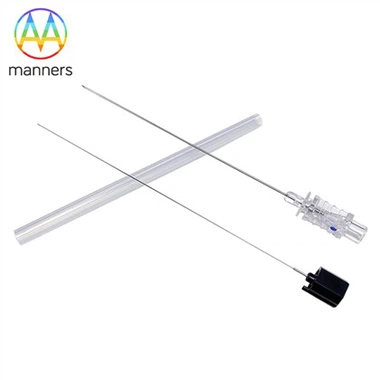
Material is the core factor determining the puncture performance, service life and clinical safety of Huber Point Needles, as well as a key indicator distinguishing high-end and low-end products. Premium Huber Point Needles across the industry adopt medical-grade stainless steel as the core substrate, with high-tensile-strength 304 stainless steel as the mainstream core material, paired with auxiliary medical polymer fittings. Through precision manufacturing processes, these needles deliver excellent toughness, hardness and biocompatibility, fully complying with global medical device safety standards. Compared with ordinary steel used for regular puncture needles, medical 304 stainless steel boasts superior tensile strength. This core characteristic prevents bending, deformation and breakage of Huber needles under high-frequency punctures and intensive clinical use, significantly lowering clinical operational risks and forming the fundamental guarantee for stable puncture performance.
From the perspective of core material properties, medical 304 stainless steel features outstanding corrosion and oxidation resistance. It can withstand long-term erosion from clinical disinfectants, medicinal liquids and human body fluids without rusting, material deterioration or harmful substance precipitation, completely eliminating hidden medical hazards including infection, medicinal liquid contamination and puncture malfunctions caused by inferior raw materials. Additionally, its moderate hardness balances sharp puncturing capacity and protection of human tissues and venous port diaphragms-avoiding excessive trauma while ensuring smooth needle penetration. Apart from the core needle body material, matching sleeves, bases and other accessories are made of medical-grade eco-friendly plastics with excellent biocompatibility, zero sensitization and non-toxicity for prolonged human contact, meeting core sterile medical operation requirements.
In terms of production technology, three core processes-CNC precision machining, mirror polishing and sterile passivation-form differentiated competitive edges for Huber Point Needles. First, CNC precision cutting controls micron-level tolerance for needle hole diameter, angle and dimensional accuracy, supporting precise mass production of full-diameter specifications ranging from 0.25 mm to 30 mm, alongside customized non-standard dimensional processing for special medical devices. Second, mirror polishing on both inner and outer needle surfaces eliminates burrs to minimize puncture resistance. This not only alleviates patients' puncture pain but also prevents burr scratches on blood vessels and soft tissues, while ensuring unobstructed medicinal liquid delivery with zero residue or blockage. Third, sterile passivation removes metal residues generated during processing to boost corrosion resistance, combined with standardized sterile packaging to guarantee factory sterility and safety compliance.
Leading global brands rely on mature material formulations and process systems to fully upgrade product performance, with all products certified under ISO 13485 specialized medical device standards for top-tier international levels of material safety, process stability and product durability. In contrast to low-end counterfeits circulating in the market, authentic Huber Point Needles feature higher-purity stainless steel substrates, stronger tensile strength and more stable process precision, tolerating hundreds of standardized puncture operations with far superior diaphragm protection and clinical safety. Premium materials and sophisticated manufacturing techniques make Huber Point Needles the preferred consumable for long-term clinical infusion and repeated puncture scenarios, laying the foundation for their dominant market position in global high-end medical puncture consumables.