Comprehensive Clinical Application Overview Of Panoramic
May 26, 2026
Specifications of Laparoscopic Cannulas and the Specialized Product Layout of Manufacturers
The laparoscopic cannula, as a universal access device for minimally invasive surgery, has specifications such as length, tip diameter, and puncture structure that directly match different surgical procedures, patient body types, abdominal wall thickness, and surgical operation difficulty. Global medical device manufacturers, based on clinical diagnosis and treatment principles, precisely divide the pipe diameter size, cannula length, and sealing valve model, forming a comprehensive product system covering general surgery, gynecology, hepatobiliary surgery, urology, and pediatric surgery. This significantly improves the safety, smoothness, and postoperative recovery effect of laparoscopic surgeries.
The length of the laparoscopic cannula is not a fixed value. It will be flexibly adjusted according to the differences in adult, obese individuals, and children's body types. For routine surgeries of ordinary adults, standard-length cannulas are used. Obese patients have thick abdominal fat and deep abdominal wall layers, so they need a longer type of laparoscopic cannula to ensure the effective operation depth of the instruments. For children, the abdominal cavity space is narrow and the abdominal wall is weak. The manufacturer specially developed short and thin minimally invasive cannulas, strictly controlling the puncture force and entry depth to avoid accidental injury to internal organs. The customized length design enables the instruments to adapt to different anatomical structures, significantly reducing complications such as intraoperative bleeding, organ perforation, and peritoneal injury.
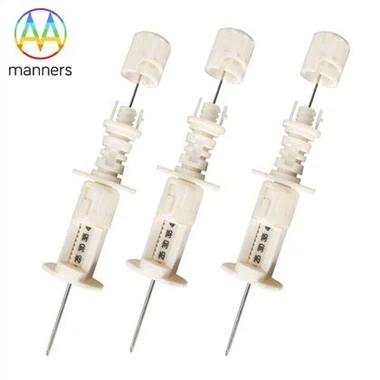
The tip diameter of the cannula, also known as the specification of the puncture device in clinical terms, is a core parameter of the product. The sharp puncture tip is responsible for piercing the abdominal fascia and peritoneum, successfully establishing an operating channel in the abdominal cavity. Different diameters correspond to different surgical instruments. Small-diameter cannulas are suitable for laparoscopic lenses, grasping forceps, and separation forceps, etc., with small trauma and quick recovery, and are commonly used in light surgeries such as uterine fibroids, ovarian cysts, and hernia repair; medium and large-diameter cannulas are suitable for large energy instruments such as laparoscopic cutting staplers, ultrasonic scalpels, and ligating sutures, and are widely used in complex general surgical procedures such as gallbladder removal, gastrointestinal repair, and appendix removal.
General surgery is the largest application field for laparoscopic cannulas. Gallbladder removal, inguinal hernia repair, and minimally invasive appendectomy are regularly carried out. Johnson & Johnson and Mindray Medical's standardized universal cannulas have strong sealing performance, stable pneumoperitoneum, smooth insertion and removal of instruments, and can maintain abdominal pressure for a long time, ensuring a clear surgical field. Minimally invasive gynecological surgeries have extremely high requirements for aesthetics and minimality. The cannulas for gynecological minimally invasive surgeries have smaller puncture wounds and extremely faint postoperative scars. Kangji Medical's specialized gynecological cannulas optimize the flexible puncture design, reduce pelvic tissue traction injuries, shorten postoperative hospital stay, and lower the risk of pelvic adhesions.
Deep surgeries in the hepatobiliary department involve long operation times and heavy equipment loads. Therefore, high-strength titanium alloys and stainless steel reusable cannulas are preferred. These cannulas have stable structures that are not prone to bending and can withstand high-temperature repeated disinfection. The urology department and gastrointestinal department mostly use large-diameter disposable sealed cannulas, which have excellent air leakage prevention performance and are suitable for high-frequency instrument exchanges. Overall, various manufacturers have continuously refined and iterated based on factors such as diameter, length, sealing structure, and puncture type, achieving one operation one specification and one department one dedicated use. This fully meets the requirements of modern minimally invasive surgical precision diagnosis and treatment, reducing the trauma of laparoscopic surgeries, minimizing pain, and accelerating recovery.