Complete Gauge Selection Guide For 16G-27G Spinal Needles
Aug 02, 2026
Industry Analysis by Reliable Medical Device Manufacturer
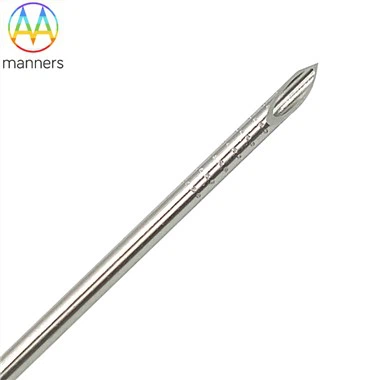
The 16G-27G medical grade stainless steel spinal needle covers 12 gradient gauges, ranking among the most complete puncture instruments for clinical lumbar puncture, spinal canal anesthesia and cerebrospinal fluid testing. Precise gauge selection is critical to raise surgical success rates and reduce complications, as different outer diameters correspond to distinct clinical scenarios, patient populations and operational demands. Combining long-term clinical supporting experience and product technical parameters, professional medical device manufacturers elaborate the gauge selection logic and industrial application criteria for full-range spinal needles.
The complete series includes 16G, 17G, 18G, 19G, 20G, 21G, 22G, 23G, 24G, 25G, 26G and 27G. Standard needle length is 90mm for all gauges, and customized lengths are available to fit varied patient body types and puncture depth requirements. In the medical industry, Gauge (G) refers to outer diameter specification. The higher the G number, the thinner the needle shaft, smaller the lumen and less invasive the puncture wound. Lower G numbers stand for thicker shafts and larger lumens, enabling higher efficiency for liquid delivery and cerebrospinal fluid extraction. Each gauge is equipped with exclusive standard color codes to facilitate rapid identification by medical staff and avoid misapplication during surgery.
Large-gauge models ranging from 16G to 19G are marked in white, light purple, pink and light grey. Featuring thick rigid shafts and large flow capacity, they are mainly adopted for complex adult spinal canal anesthesia, large-volume cerebrospinal fluid sampling, intraspinal drug injection and intracranial pressure monitoring. For obese patients or those with thickened ligaments, thick needles easily penetrate dense ligament tissues without puncture stagnation or shaft bending, significantly improving puncture success rates. The large lumen supports rapid delivery of anesthetics to shorten anesthesia onset time, applicable to neuraxial block anesthesia for general surgeries and intensive neurology diagnosis and treatment.
Medium-gauge spinal needles (20G-23G) with yellow, green, black and dark blue color codes serve as mainstream general clinical specifications. Suitable for routine adult lumbar puncture, outpatient anesthesia and standard cerebrospinal fluid examination, they balance puncture stability and minimal invasiveness. Resistance changes evenly while penetrating the ligamentum flavum, allowing clinicians to clearly perceive the "give way" sensation to accurately reach the subarachnoid space. These needles fulfill routine sampling and drug delivery demands while lowering risks of injury to the dura mater and spinal nerves, with broad adaptability for daily clinical operations in hospitals of all tiers.
Ultra-fine small-gauge needles (24G-27G) in purple, orange, brown and grey focus on minimally invasive procedures. They are primarily used for pediatric patients, elderly vulnerable populations and precise spinal canal puncture operations. Children have narrow spinal canals and fragile soft tissues, while elderly patients suffer from spinal degeneration and delicate blood vessels and nerves. Ultra-fine shafts minimize tissue trauma and decrease incidence of postoperative headache, hemorrhage and cerebrospinal fluid leakage, ideal for pediatric anesthesia, trace cerebrospinal fluid testing and precise intraspinal drug administration.
As a professional medical device manufacturer, all 16G-27G spinal needles strictly follow medical instrument specifications with unified recognizable color codes and accurate dimensions. Customized shaft lengths and adjusted specifications are available to meet special diagnosis and treatment demands of specialized hospitals, private medical institutions and research institutes. Medical practitioners shall select gauges according to patient age, body type, operation type and clinical objectives instead of arbitrarily choosing thick or thin needles to balance operation efficiency and patient experience. Manufacturers will further refine the gauge matching system, optimize mechanical performance of needle shafts of different sizes and adapt to more segmented clinical scenarios in the future.