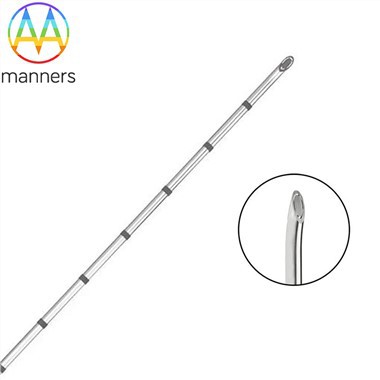
Clinical Safety Specification And Postoperative Nursing Standard System For Stainless Steel Spinal Needle Puncture
Aug 01, 2026
Although lumbar puncture using Medical Stainless Steel Spinal Needle involves potential risks such as cauda equina nerve compression and brain hernia, it is still an irreplaceable essential diagnostic method for neurological diseases, intracranial pressure detection and spinal anesthesia. Clinical data prove that as long as the indications are strictly followed, the operation procedures are standardized, and scientific postoperative nursing is matched, lumbar puncture is highly safe and will not cause irreversible damage to the human body. The standardized operation and nursing system are the core guarantees for eliminating puncture risks and ensuring patient safety.
Preoperative standardized evaluation and preparation are the premise of safe puncture. Medical staff need to strictly screen puncture contraindications, prohibit lumbar puncture for patients with intracranial hypertension, intracranial space-occupying lesions, severe cerebral edema and unstable vital signs, and eliminate the risk of brain hernia. Select matching stainless steel spinal needle specifications according to the patient's age, weight, spinal development and physical condition: prefer ultra-fine Pencil Point minimally invasive needles for children, the elderly and fragile patients, and select medium-size conventional needles for adult routine operations to balance efficiency and safety.
Intraoperative standardized operation is the key to prevent nerve complications. Operators need to master professional anatomical knowledge, accurately locate the lumbar puncture gap, control the needle insertion speed and angle smoothly, avoid blind exploration and excessive needle insertion depth, and prevent direct compression and scratching of the cauda equina nerve. Control the outflow speed and extraction volume of cerebrospinal fluid to avoid rapid drop of spinal canal pressure and intracranial and spinal pressure imbalance. Keep the operation process stable and gentle, reduce tissue and nerve stimulation, and effectively avoid transient lower limb numbness and pain symptoms.
Standardized postoperative nursing is an important link to eliminate potential risks and promote rapid recovery. After lumbar puncture, patients must adhere to pillow-free supine rest for 4 to 6 hours to stabilize intracranial and spinal pressure balance, avoid delayed headache and brain pressure abnormalities. During the rest period, keep warm strictly to prevent cold-induced vasospasm and nerve stimulation, reduce bending, turning over and strenuous activities, and avoid secondary nerve compression and tissue traction damage. Develop a regular work and rest habit, avoid staying up late and overworked, and promote the self-repair of spinal soft tissue and nerve tissue.
For patients with mild transient lower limb numbness and pain after puncture, symptomatic observation and routine nursing can be adopted, and most symptoms can disappear spontaneously within a short time. For individual patients with obvious discomfort, targeted nerve nutrition and symptomatic treatment can be given to accelerate recovery. The perfect whole-process safety specification and postoperative nursing system completely resolve the potential clinical risks of lumbar puncture, give full play to the diagnostic and therapeutic value of Medical Stainless Steel Spinal Needle, and ensure the safe, standardized and efficient development of clinical spinal puncture operations.