Clinical Application Guidelines And Operating Specifications: Full‑Scenario Coverage From Pediatric Emergency Care To Adult Trauma
May 12, 2026
Intraosseous (IO) access needles play an irreplaceable role in emergency medicine, especially when venous access is difficult to establish. According to clinical guidelines, in cases of non‑shockable rhythms where intravenous infusion lines cannot be established immediately, each one‑minute delay in epinephrine administration reduces the adult survival‑to‑discharge rate by 4%, the pediatric survival‑to‑discharge rate by 9%, and the overall neurologically intact discharge rate by 6%.
Core Role in Pediatric Emergency Care
Pediatric patients account for the largest share of the intraosseous infusion device market, representing 68.2% of the total market in 2024. The utilization of intraosseous injection in tertiary pediatric centers has increased by 41%, with more than 70% of resuscitation scenarios requiring immediate vascular access. For critically ill children in shock in whom venous access cannot be readily obtained (e.g., after two failed peripheral venipuncture attempts), intraosseous cannulation is recommended for medication administration, fluid resuscitation, contraindication assessment, and diagnostic testing - rather than percutaneous central venous catheterization or venotomy.
Operating Specifications and Puncture Techniques
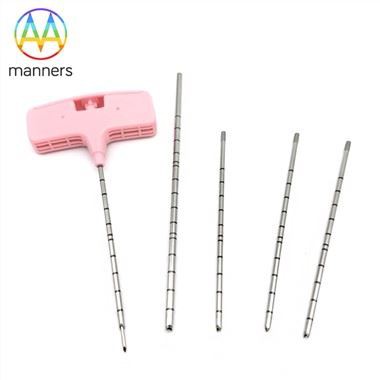
For battery‑powered devices, needle length is selected based on the patient's weight and subcutaneous tissue thickness: a 15 mm needle is recommended for patients weighing 3–39 kg; a 25 mm needle for patients ≥40 kg with normal subcutaneous tissue; and a 45 mm needle for patients ≥40 kg with excessive subcutaneous tissue. The proximal tibia is the preferred primary puncture site unless contraindicated. The exact puncture point is determined according to the child's age and anatomical characteristics.
Disinfection and Aseptic Technique
Antiseptic agents such as chlorhexidine or povidone‑iodine solution are used to disinfect the injection site over a minimum 15 cm diameter, applying 2–3 wipes from the center outward. In emergent settings, disinfection follows the principles for peripheral venipuncture; for elective procedures, central venous line disinfection protocols are applied. Prior to the procedure, surgical masks, goggles, latex‑free sterile gloves, and sterile drapes are prepared, and a surgical aseptic non‑touch technique is implemented.
Drug Infusion and Access Management
The intraosseous venous plexus remains patent during circulatory collapse. The pharmacokinetics, pharmacodynamics, and dosing of medications administered via the intraosseous route are comparable to intravenous administration. Hyperosmolar agents such as chemotherapeutic drugs and lipid emulsions are not recommended for IO infusion. Conventional intravenous medications, resuscitation fluids, and blood products can be safely administered without dose adjustment. For rapid fluid resuscitation, an infusion pump or pressure infusion bag is recommended; the infusion pressure for pediatric patients is set at 150 mmHg.
Complication Prevention and Access Removal
An intraosseous access at a single site should remain in place for no more than 24 hours, with a maximum of 96 hours under exceptional circumstances. Removal is performed per the manufacturer's instructions using an axial twisting withdrawal technique, followed by proper management of the puncture site. The most common complication is subcutaneous extravasation; other potential complications include fracture and compartment syndrome. Strict aseptic practice must be maintained, the puncture site closely monitored, and complications promptly identified and managed.