Choice And Balance: Supply Chain Game Of Disposable And Reusable Breast Cancer Biopsy Needles
May 06, 2026
Choice and Balance: Supply Chain Game of Disposable and Reusable Breast Cancer Biopsy Needles
In the field of breast cancer biopsy needles, one-time-use and reusable products represent two completely different product philosophies and supply chain models. This competition not only concerns clinical choices, but also profoundly affects the entire supply chain system from upstream materials, midstream manufacturing to downstream logistics.
Comparison between clinical value and supply chain logic
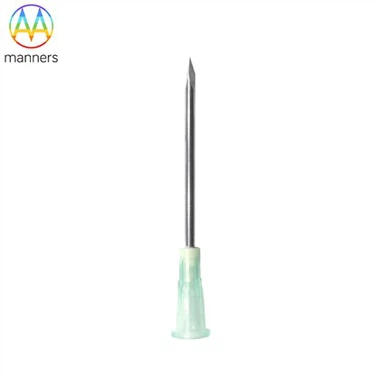
* One-time biopsy needle: The core value lies in absolute safety and ease of operation. It completely eliminates the risk of cross-infection caused by incomplete cleaning and disinfection, and ensures the best sharpness and performance each time it is used, with a simplified operation process. Its supply chain logic is "large-scale, standardized, and low-cost". The product design is highly optimized for automated production, and the raw materials tend to use medical engineering plastics and standard stainless steel. The manufacturing core is high-speed injection molding, automated assembly, and sterilization production lines. Supply chain management pursues ultimate efficiency, scale effect, and inventory turnover rate.
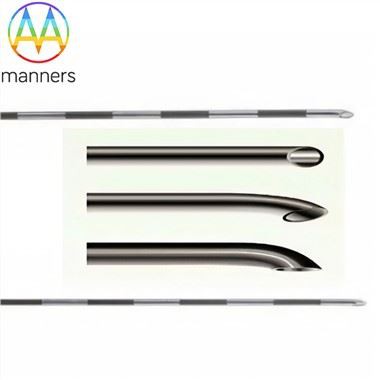
* Reusable biopsy needle: The core value lies in the economic nature of long-term use. Although the initial purchase cost is high, it can be reused 5-8 times after strict disinfection, and the single-use cost is significantly lower than that of disposable products. Its supply chain logic is "high durability, meticulous maintenance, and strong service". The product must use more durable materials (such as high-grade stainless steel, titanium alloy), and the design needs to consider disassemblability and resistance to repeated sterilization. The supply chain includes an important环节 of reprocessing services: professional cleaning, disinfection, sterilization, functional testing, and re-packaging services need to be provided. This has given rise to a derivative supply chain consisting of hospital disinfection supply centers or third-party service providers.
The fundamental differences in cost structure
The cost structures of the two represent different business models:
* One-time products: The costs are concentrated on production costs (raw materials, processing, assembly, sterilization, packaging). Their business model relies on the continuous consumption of consumables, and the key to profitability lies in scale and cost control.
* Reusable products: Costs are distributed among the initial production costs (higher), reprocessing costs (water, electricity, chemical reagents, labor), and maintenance costs throughout the life cycle. Their business model combines the sale of equipment in the early stage with service income in the later stage.
Market trends and the response of the supply chain
Currently, the market is clearly shifting towards disposable products (which now account for 52% of all biopsy needle usage). The driving forces behind this trend include the improvement of hospital infection control standards, the increase in human resource costs, and the pursuit of operational standardization and efficiency. However, reusable products still have their market in budget-constrained primary medical institutions or in certain special scenarios.
This trend has a revolutionary impact on the supply chain:
1. Material supply chain shift: The demand for medical-grade plastic particles and disposable packaging materials has surged, while the demand structure for ultra-high-end specialty metals has changed.
2. Manufacturing center migration: Industrial investment has shifted from precision mechanical processing workshops to large-scale automated sterile consumables production lines.
3. New service chain emergence: The popularity of disposable products, along with the growth in demand for medical waste disposal, has promoted the development of professional medical waste recycling and processing supply chains. At the same time, the reprocessing services for reusable products have evolved towards a more specialized and centralized direction.
4. Logistics and inventory management: The consumption of disposable products is predictable, which has driven hospitals to adopt supplier-managed inventory or just-in-time delivery models, requiring supply chains to have extremely high response speed and data visualization capabilities.
The Future of Integration and Innovation
In the future, these two models may not completely replace each other but rather merge. For instance, some components can be reused (such as the controller), while the core piercing part is disposable in a "hybrid" product. Alternatively, exploring one-time products based on degradable biodegradable materials to reduce environmental pressure. Moreover, with the rise of the "device-as-a-service" model, manufacturers may no longer simply sell products but provide full-cycle solutions including the device, consumables, maintenance, and disposal.
The ultimate winner of this game will be those enterprises that can deeply understand the differences in clinical value and build the most resilient and efficient corresponding supply chain system. The supply chain is no longer merely a support for production; it is a direct reflection of an enterprise's strategic choices and market positioning.