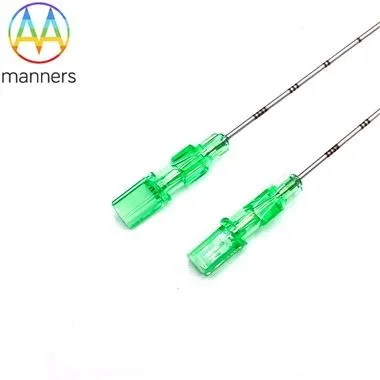
Bore And Length Selection For One Closed Flat End Tubes Capillary
Nov 04, 2026
Meta: Bore and length selection for one closed flat end tubes capillary, covering bore tolerance, length margin, pressure gauge tuning and liquid supply balancing method.
1. Core Industry Pain Points
Wrong bore and length selection of one closed flat end tubes causes refrigerant flow imbalance. Many designers specify only outer diameter and total length, ignoring the inner bore tolerance that directly controls throttling. Domestic low-cost capillary often has uneven inner bore, and defective sections flow into assembly. When the system is charged, some tubes deliver too much liquid and overload the compressor, while others under-feed the evaporator and cause temperature sensor drift. Technicians frequently choose a fixed length without adjustment margin, so when high pressure deviates, they must cut or replace, wasting time and material. Bore grade mixing between batches makes the same length behave differently, confusing on-site tuning and increasing commissioning rework.
2. Fundamental Working Principle
The throttling principle of one closed flat end tubes capillary is that flow volume is highly sensitive to bore diameter, proportional roughly to the fourth power of inner diameter. Small bore reduction dramatically lowers flow. Length also affects resistance: longer capillary provides more throttling. The system tuning relies on the pressure window. Air is drawn in through the repair valve at the compressor process port and ejected from the open end of the capillary. When the low-pressure gauge equals atmospheric pressure, the high-pressure gauge between condenser outlet and filter should read 1–1.2MPa. If too high, cut a proper section; if too low, use a longer or smaller-bore capillary. New capillary should be chosen a little longer to allow easy adjustment.
3. Equipment and Category Classification
Material: Stainless Steel 304 for general refrigeration sensors; Stainless Steel 316 for corrosive scenes. Measuring equipment includes high-pressure and low-pressure gauge, manifold, repair valve and laser bore gauge. Machining equipment covers cutting, grinding, swaging, flaring and bending machines for custom tube shapes: round, oval, square and rectangular. Inspection equipment includes inner diameter plug gauge and airflow resistance tester. Surface treatment: polishing for low-resistance lumen; sandblasting or coating for outer protection. Certification: ISO9001:2015 and SGS.
4. Standard Operation Guide
First, confirm bore specification from the drawing and measure incoming tube bore one by one for domestic material, grading by tolerance. Second, select initial length with extra margin, since longer capillary is easier to adjust downward by cutting. Third, connect the repair valve to the process port, charge refrigerant and read gauges. Fourth, tune according to window. If high-pressure gauge is too high, cut off a short section. If too low, switch to a longer or smaller-bore capillary. If the deviation is small, coil the capillary into a spiral spring to add resistance. Fifth, after tuning, clean and seal the tube, and record the final bore grade and length for traceability.
5. On-Site Practical Experience
Bore uniformity is the most overlooked index. Capillary coils often have defective sections at both ends, so it is wise to cut off 5–10mm from each end before measuring. Bores measured one by one produce far more consistent system performance than unsorted batches. Starting with a longer capillary is recommended because trimming is easier than extending. Cutting should be done gradually and the gauge re-read after the system stabilizes. A common error is choosing smaller bore when the real problem is bore non-uniformity. Airflow resistance test is a fast auxiliary check to match capillary grades.
6. Conclusion and Value
Scientific bore and length selection turns one closed flat end tubes into reliable throttling components. Establishing the 1–1.2MPa window and keeping length margin simplify tuning and reduce waste. Uniform bore measurement, longer initial length and flexible adjustment paths jointly improve refrigeration performance and sensor stability.
7. Industry Outlook and Suggestions
Online laser bore inspection integrated with cutting will enable full sorting. Buyers should specify bore tolerance and length margin on drawings. Manufacturers can offer graded capillary product lines for sensor housing. For export refrigeration projects, adopt SUS316 and provide batch SGS reports.