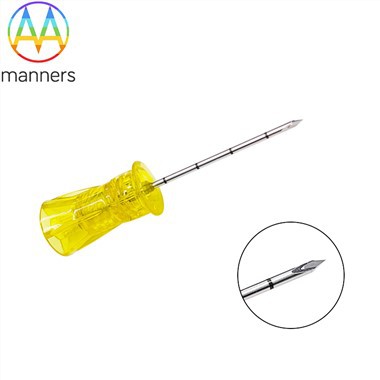
Bone Marrow Biopsy Needles: Types, Uses
Aug 22, 2026
I. Objectives
Diagnostic purpose: Assist clinical diagnosis by examining bone marrow cellular hyperplasia, cellular composition and morphological changes, performing cytogenetic (chromosome) testing, molecular biological (gene) testing, hematopoietic stem‑cell culture, as well as parasitic and bacteriological examinations.
Therapeutic purpose: Evaluate treatment response and prognosis. It can also harvest bone marrow for bone marrow transplantation.
II. Indications
Diagnosis of various hematological diseases; detection of bone marrow invasion or metastasis caused by systemic neoplastic diseases.
Unexplained hepatomegaly, splenomegaly, lymphadenopathy, and fever of unknown origin.
Certain infectious or parasitic diseases requiring bone marrow bacterial culture or smear for pathogen detection, e.g. bone‑marrow culture for Salmonella typhi, detection of Plasmodium and Leishman‑Donovan bodies on bone‑marrow smears.
Diagnosis of certain metabolic diseases, such as Gaucher disease, whose definitive diagnosis relies on identification of Gaucher cells in bone‑marrow samples.
Assessment of therapeutic response and prognosis in hematological disorders and other diseases involving bone‑marrow infiltration.
Bone‑marrow harvesting for bone‑marrow transplantation.
III. Contraindications
Hemophilia and severe coagulation disorders. If bone‑marrow examination is not the only diagnostic option, the procedure should be avoided to prevent severe delayed local hemorrhage. Note: Thrombocytopenia alone is not a contraindication to bone marrow puncture.
Local skin infection over the intended puncture site.
IV. Pre‑procedural Preparation
1. Patient Preparation
(1) Perform coagulation‑function testing in patients with suspected coagulopathy to assess procedural suitability. (2) Explain the purpose, procedural steps, potential discomforts and precautions to the patient or legal representative. (3) Instruct the patient on cooperation during the procedure: report pain or discomfort promptly; keep the puncture site clean and avoid water exposure for 3 days after the procedure. (4) Obtain written informed consent from the patient or family member. Pre‑procedural communication and documented informed consent are mandatory.
2. Material Preparation
(1) Procedure trolley containing: ① Bone‑marrow puncture kit: Bone Marrow Biopsy Needles, sterile tray, forceps, hole‑towel, gauze swabs and cotton balls. ② Disinfectants: 2.5 % tincture of iodine, 75 % ethanol, 0.5 % povidone‑iodine. ③ Local anesthetic: 2 % lidocaine (5 mL). (2) Additional supplies: disposable syringes, sterile gloves, glass slides, spreader slides, anticoagulant collection tubes.
3. Operator Preparation
(1) Verify patient identity. (2) Master procedural knowledge; review patient history and indication for puncture. (3) Position the patient appropriately; identify and mark the puncture site. (4) Perform hand hygiene; don cap, mask and sterile gloves. (5) Be competent in producing high‑quality, standardized bone‑marrow smears according to clinical objectives.
V. Operating Procedures
1. Patient Positioning
Positioning depends on the selected puncture site: (1) Prone or lateral decubitus: for posterior superior iliac spine. (2) Supine: for anterior superior iliac spine and sternum. (3) Sitting or lateral decubitus: for lumbar spinous process.
2. Selection of Puncture Site
(1) Posterior superior iliac spine: a rounded bony prominence approximately 3 cm lateral to the L5‑S1 level. This is the most commonly used site for its high success rate and safety; it is preferred for large‑volume bone‑marrow harvesting for transplantation. (2) Anterior superior iliac spine: flat bony surface 1‑2 cm distal to the anterior superior iliac spine. Easy stabilization and safe access, yet lower bone‑marrow cellularity and slightly lower success rate compared with the posterior superior iliac spine. (3) Sternal site: midline of the sternal body at the 2nd intercostal space. Rich in bone‑marrow elements; indicated when other sites yield non‑diagnostic samples. Sternal puncture is required for evaluation of aplastic anemia. (4) Lumbar spinous process: prominence of lumbar spinous process. Good cellular yield but technically demanding and infrequently used. Avoid sites with local skin infection. Mark the selected puncture site.
3. Skin Disinfection and Draping
(1) Don sterile gloves. Place cotton balls into two sterile cups for 2.5 % tincture of iodine and 75 % ethanol respectively. (2) Centered on the marked site, apply 2.5 % tincture of iodine over a diameter >15 cm. Allow 1 minute for drying, followed by two cycles of 75 % ethanol disinfection using the same radius. (3) Apply sterile hole‑towel with its opening centered over the puncture site. Secure with adhesive tape for sitting or lateral‑decubitus positions.
4. Local Anesthesia
(1) Aspirate approximately 5 mL of 2 % lidocaine with a 5‑mL syringe. (2) Raise a subcutaneous wheal at the puncture site. Advance the syringe vertically. (3) Aspirate intermittently; inject local anesthetic only if no blood is aspirated. Infiltrate sequentially through soft tissues down to the periosteum. Record the depth of needle penetration. Perform multi‑point periosteal anesthesia to anesthetize an area rather than a single point, reducing pain from misalignment between puncture and anesthetic sites.
5. Puncture
(1) Needle depth adjustment for Bone Marrow Biopsy Needles: compare depth with the anesthetic syringe. Adjust the adjustable stopper of the bone‑marrow biopsy needle to 0.5‑1 cm deeper than the depth reached during periosteal anesthesia. Set approximately 1 cm from the needle tip for sternal and spinous‑process puncture; set approximately 1.5 cm for anterior and posterior superior iliac spine puncture. (2) Puncture technique: ‑ For anterior and posterior superior iliac spine: stabilize the site with thumb and index finger. Hold the Bone Marrow Biopsy Needles perpendicular to the bone surface. Rotate gently along the long axis while advancing. A sudden reduction in resistance indicates entry into the medullary cavity. Advance roughly 1 cm past the periosteum. Avoid excessive lateral movement or forceful advancement. ‑ For sternal puncture (risk of great‑vessel and cardiac injury): stabilize the site. Orient the bevel toward the medullary cavity, tip angled 70°‑80° toward the patient's head. Rotate gently and advance 0.5‑1 cm. Fixation within bone, rather than distinct "give‑way" sensation, confirms correct position. Exercise extra caution in osteoporotic elderly patients and multiple‑myeloma patients. ‑ For lumbar spinous‑process puncture: stabilize the site. Advance the Bone Marrow Biopsy Needles perpendicular to bone surface with gentle rotation for 0.5‑1 cm. Fixation in bone confirms position; a clear breakthrough sensation is often absent. (3) Aspiration: Remove the stylet and place in sterile tray. Attach a dry syringe. Bone‑marrow fluid return confirms successful access. If no fluid is obtained, reinsert the stylet, rotate or advance slightly, then re‑aspirate. Warn the patient of transient sharp pain during aspiration.
6. Smear Preparation
Detach the syringe, reinsert the stylet, and expel bone‑marrow fluid onto glass slides promptly to prevent clotting. An assistant uses a spreader slide to prepare smears rapidly. Label slides with name, age, gender and medical‑record number. For hypercellular marrow prepare thinner smears; for hypocellular marrow prepare thicker smears. Adequate smears should show head, body and tail regions.
7. Needle Removal and Wound Care
(1) Withdraw the Bone Marrow Biopsy Needles with stylet in place. (2) Disinfect the skin. Apply sterile gauze and maintain manual compression for 1‑3 min; secure with adhesive tape. (3) Instruct the patient to keep the site dry and clean for 3 days.
VI. Complications and Management
Perforation of posterior sternal cortex with injury to heart or great vessels: life‑threatening, caused by excessive force or over‑penetration during sternal puncture. Strictly limit needle‑stopper position to 1 cm for sternal access; advance slowly with gentle rotation. Use minimal initial force in osteoporotic patients and patients with multiple myeloma.
Fracture of Bone Marrow Biopsy Needles within bone: usually caused by excessive lateral manipulation after needle entry into bone or forceful advancement against dense bone. Surgical consultation is required if needle fracture occurs within bone.
Criteria for Successful Bone‑Marrow Puncture
Transient sharp pain on bone‑marrow aspiration.
Yellowish‑white bone‑marrow particles visible within aspirated material.
Identification of bone‑marrow‑specific cells such as megakaryocytes, plasma cells and reticular cells on smears.
This procedural document covers complex clinical workflows with specialized instrument requirements. The work‑task mode supports enhanced structural sorting and information collation for clinical documents like this. Would you like to use it?