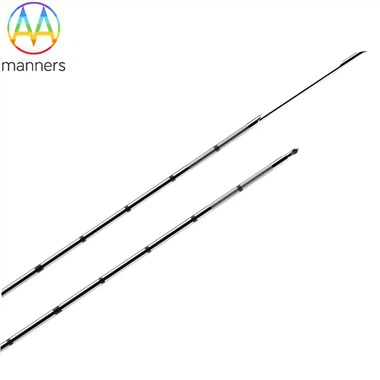
Arteriovenous Fistula Needles (AVF Needles): Industry Standards, Material Innovation, And Full-Process Quality Control
Apr 16, 2026
Arteriovenous Fistula Needles (AVF Needles): Industry Standards, Material Innovation, and Full-Process Quality Control
In the medical field, safety and reliability are the lifeblood of any product. As a Class III medical device that directly accesses the patient's circulatory system, the Arteriovenous Fistula (AVF) Needle is subject to extremely stringent regulations and standards globally regarding its design, production, and use. In 2026, industry competition extends beyond the product itself to encompass a comprehensive comparison of the depth of standards comprehension, material innovation capabilities, and the robustness of full-process quality control systems.
Adherence to Stringent Regulations and Standards
A qualified AVF needle must satisfy multi-level standard requirements:
Quality Management System Standards: ISO 13485 is the universal quality management system standard for the medical device industry. It requires manufacturers to establish systems covering the entire process of design and development, procurement, production, installation, and service to ensure products consistently meet regulatory and customer requirements. Additionally, ISO 9001 serves as a foundational management standard adopted by many manufacturers.
Product Safety and Performance Basic Standards: Compliance with local regulations is mandatory for sales in different markets. In China, relevant national standards such as GB 9706.1 (Medical Electrical Equipment – Part 1: General Requirements for Basic Safety and Essential Performance) must be met. In the United States, requirements under FDA 21 CFR Part 820 (Quality System Regulation) apply. In Europe, products must bear the CE mark, certifying compliance with the essential requirements of the EU Medical Device Regulation (MDR).
Dedicated Product Standards: While specific industry standards exist for AVF needles (e.g., YY/T 0589 Cardiovascular implants and artificial organs - Extracorporeal blood circuits for blood purification equipmentmay cover related components), production extensively references other relevant standards. These include ISO 7864 (Sterile hypodermic needles for single use) for testing methods related to needle tube rigidity, toughness, corrosion resistance, and connection fastness, as well as ISO 9626 (Stainless steel needle tubing for medical use) for dimensional and material requirements of needle tubing.
Biological Evaluation Standards (ISO 10993 Series): Comprehensive biocompatibility testing is mandatory, including cytotoxicity, sensitization, intracutaneous reactivity, and acute systemic toxicity tests, to prove the safety of the product upon human contact.
Frontier Advances in Material Innovation
Materials form the cornerstone of product performance. Material innovation in AVF needles focuses on enhancing performance, safety, and patient experience.
Needle Tube Materials: Austenitic 316L stainless steel remains the mainstream due to its excellent corrosion resistance, strength, and processability. The direction of innovation lies in special smelting and cold-drawing processes to obtain tubes with finer grains, higher strength, and thinner, more uniform walls. This achieves a "larger inner diameter within a smaller outer diameter" design, increasing blood flow while minimizing vascular trauma.
Hub and Wing Materials: Medical-grade polymers such as Polycarbonate (PC), Acrylonitrile Butadiene Styrene (ABS), and Polypropylene (PP) are widely used. There is a trend towards using softer, more biocompatible Thermoplastic Elastomers (TPE) or silicone for the wings to improve patient comfort, fit, and reduce pressure injuries.
Surface Modification Technologies:
Ultra-Lubricious Hydrophilic Coatings: Technologies like plasma treatment and graft polymerization are used to firmly bind hydrophilic polymers (e.g., Polyvinylpyrrolidone - PVP) to the needle surface. Upon contact with water or blood, this coating rapidly hydrates to form a durable lubricating layer, significantly reducing puncture friction (by over 80%). This is a key technology for smoother insertion and reduced patient pain.
Antimicrobial Coatings: Loading sustained-release antimicrobial agents (e.g., Silver ions, Chlorhexidine) onto the needle surface aims to lower the risk of puncture site infections, particularly beneficial for immunocompromised dialysis patients.
Full-Process Quality Control and Traceability
Quality originates from design and permeates every manufacturing step.
Incoming Quality Control (IQC): Strict verification of chemical composition, physical properties, and biocompatibility certificates for all raw materials, including stainless steel tubes, polymer resins, and coating chemicals.
In-Process Quality Control (IPQC):
5-Axis Laser Cutting: Machining needle tips and side holes via high-precision laser cutting machines. Machine vision systems monitor cutting dimensions, angles, and burrs in real-time to ensure geometric consistency across every needle.
Electropolishing: Precisely controlling current, voltage, time, and electrolyte parameters to ensure a specified surface finish and passivation effect on both the inner and outer surfaces of the needle tube, eliminating microscopic defects.
Ultrasonic Cleaning: Utilizing multi-stage cleaning tanks with varying ultrasonic frequencies and pharmacopeia-compliant cleaning agents to thoroughly remove particles, oils, and process residues. Particle testing post-cleaning is a critical control point.
Coating Process: Rigorous testing of hydrophilic coating thickness, uniformity, and adhesion to ensure stable and reliable performance.
Final Product Inspection (FQC) and Release:
Performance Testing: Including puncture force testing (simulating skin and vascular tissue), flow rate testing, tensile testing of connection points, and safety device functionality testing.
Sterility Assurance: Post-sterilization (e.g., Ethylene Oxide or Radiation) testing for sterility and Ethylene Oxide residuals is mandatory.
Package Integrity Testing: Ensuring the sterile barrier is maintained throughout the shelf life.
Full Lifecycle Traceability: Through the product batch number, traceability extends to the raw material batch, production equipment, operators, environmental data, and all inspection records. This is crucial for rapid recall and root cause analysis of defective products.
Industry Trend: From Compliance to Excellence
Leading manufacturers are driving quality control towards higher levels:
Risk-Based Quality Management: Utilizing risk management tools (like FMEA) to systematically identify and evaluate all potential risks during the design phase and implement focused controls during production.
Data-Driven and Intelligent Systems: Integrating more sensors on production lines to collect process parameters in real-time, using big data analysis to predict quality trends and achieve preventive quality control.
Green Manufacturing and Sustainability: Focusing on energy consumption, waste disposal, and the use of recyclable materials in the production process to respond to global calls for sustainable development.
In conclusion, the superior quality of AVF needles in 2026 is a crystallization of precision engineering, material science, and strict quality management. Competition among top manufacturers is essentially a competition of quality culture, technical heritage, and systemic capability. Only by firmly grounding innovation on the cornerstone of compliance and quality can truly trustworthy medical products be manufactured, safeguarding the safety of millions of dialysis patients worldwide.