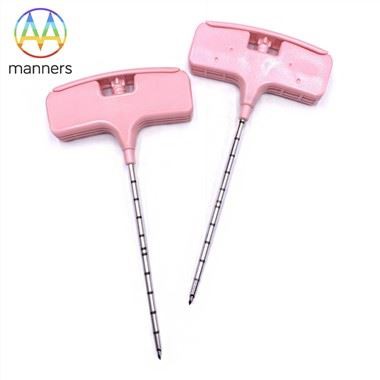
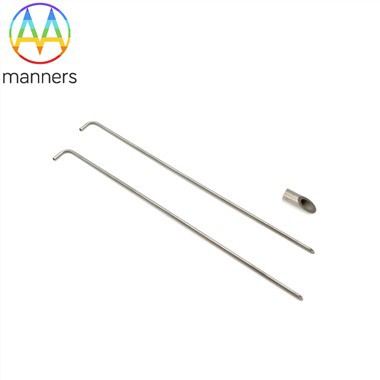
Airway Cannula
Sep 13, 2026
Pain Point
In intensive care (ICU), emergency medicine, and ENT, airway cannulas deliver oxygen, enable suctioning, and provide access for bronchoscopy. Patient head and neck movement is constant, yet existing airway cannulas often fail to accommodate this dynamic. Rigid metal tubes irritate tracheal mucosa during patient turning, potentially causing ulceration; soft PVC tubes readily kink during bending, interrupting oxygen delivery or suctioning; reinforced polymer tubes resist kinking but are bulky and uncomfortable. Clinicians and families seek a "moves-without-kinking" cannula-one that remains patent during motion while causing no secondary tissue injury.
Principle
The design essence of an airway cannula lies in decoupling hoop stiffness from axial flexibility. Laser cutting creates patterns such as radial slots, staggered rings, or spiral-radial hybrids. These permit axial bending while maintaining circumferential stiffness to resist negative pressure (during inspiration) or external compression. Radial-cut "hinges" allow snake-like bending; uncut ring segments act as "ribs" to keep the lumen open. For neonatal and pediatric patients, Nitinol superelasticity combined with laser cutting provides extreme flexibility and shape recovery-the cannula can be flattened and instantly spring back. The 0.012 mm kerf ensures edges will not irritate sensitive tracheal mucosa.
Equipment Classification
- Nasal Oxygen Cannula: Soft 316L or polymer-metal hybrid; laser-cut nasal prongs adapt to varying anatomies for enhanced comfort.
- Bronchial Access Cannula: ~5 mm diameter, spiral-cut for navigating segmental bronchi during diagnostic/therapeutic bronchoscopy.
- Neonatal Airway Cannula: Ultra-fine Nitinol micro-tubes for premature infants, requiring extreme flexibility and kink recovery.
- Radial-Flex Airway Tip: Distal radial cuts reduce stimulation of the tracheal carina and bronchial orifices, ideal for prolonged mechanical ventilation.
- Bespoke Ventilator Access Cannula: Dual-lumen designs separating positive-pressure ventilation from continuous suction or drug delivery via complex laser-cut channel isolation.
Practical Guide
- Rigid Connection Zone: The proximal section interfacing with ventilator tubing must remain rigid to prevent kinking at the connection point. Flexibility should be concentrated in the distal intra-airway segment.
- Ultra-Smooth Tip: All laser-cut edges must be electropolished to a mirror finish. Even microscopic burrs can trigger edema or bleeding in fragile airway mucosa.
- Dynamic Kink Testing: Test under simulated patient head rotation (e.g., from neutral to maximum lateral flexion), verifying uninterrupted airflow throughout the full range of motion-not just static bend radius.
- CO₂ Rebreathing Assessment: For dual-lumen or side-slot designs, evaluate CO₂ clearance to prevent rebreathing due to suboptimal exhaust pathways.
- Oxygen-Compatible Coatings: Any polymer coating must be flame-retardant and compatible with high-concentration oxygen environments to eliminate fire hazards.
Real-World Experience
In NICUs, traditional PVC nasal cannulas frequently kinked during premature infants' involuntary facial movements, causing sudden oxygen desaturation. Switching to laser-cut Nitinol micro-tubes allowed the cannula to bend with infant motion and instantly recover, significantly improving SpO₂ stability. In adult pulmonology, an interrupted-spiral bronchial suction cannula tracked into subsegmental bronchi more smoothly than straight steel tubes, reducing epistaxis incidence while improving secretion clearance.
Conclusion
The airway cannula bridges life-support equipment and the patient's delicate respiratory tract. It must remain patent amid dynamic motion while delivering therapy without causing harm. Laser cutting endows airway cannulas with "biomimetic" capabilities-flexing and resisting collapse like the trachea itself-revolutionizing respiratory care.
Outlook & Recommendations
With expanding home oxygen therapy and portable ventilator use, demand for comfortable, reliable laser-cut airway cannulas will surge. Manufacturers should develop patient-specific pre-shaped cannulas (e.g., based on CT data) and explore antimicrobial coatings to reduce ventilator-associated pneumonia (VAP). Procurement criteria should include motion-kink cycle durability and patient comfort scoring, reflecting real-world usage rather than idealized bench conditions.