Absolute & Relative Contraindications For Intraosseous Vascular Access Needle Application
Jul 28, 2026
Global emergency medicine associations released the 2026 updated Intraosseous Vascular Access Clinical Guidelines, which comprehensively revised and refined the contraindication specifications for intraosseous intubation, forming unified judgment standards for global hospitals and pre-hospital rescue institutions. For front-line clinicians and medical procurement teams, understanding the latest contraindication rules and matching qualified Vascular Access Needle Sets from professional Vascular Access Needle Sets Manufacturer is critical to avoiding medical accidents and standardizing rescue behaviors.
The updated guidelines clearly define absolute contraindications for intraosseous access. First, planned insertion sites with long bone fractures are prohibited from puncture, as damaged bone structure cannot fix the needle body and will inevitably cause fluid extravasation and fracture aggravation. Second, limbs with vascular damage and local blood circulation disorders are contraindicated, since intraosseous infusion cannot form effective central circulation delivery and will increase local tissue pressure. Third, skin infection lesions such as cellulitis at the insertion site are absolute contraindications to prevent infection seeding leading to deep tissue abscess and osteomyelitis.
A key updated rule in 2026 is the 24-hour repeated puncture prohibition clause. Any site with intraosseous intubation within 24 hours is prohibited from secondary puncture, because the bone cortex forms leakage channels after the first needle withdrawal, which cannot provide closed cavity conditions and will cause high-risk extravasation. In addition, patients with prior orthopedic surgery and artificial prosthesis implantation at the target site are listed as relative contraindications, requiring clinicians to replace puncture sites or abandon intraosseous access according to the situation.
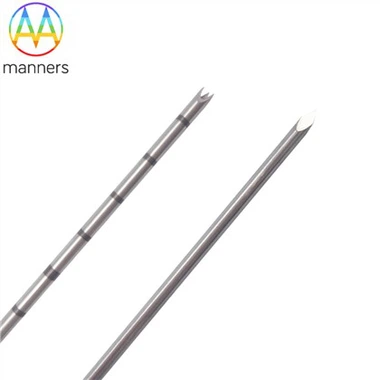
Professional Vascular Access Needle Sets Manufacturer deeply iterates product design and product manuals based on the latest guideline updates. Standard 15G vascular access needle sets are calibrated for conventional contraindication scenario adaptation, with precise puncture rigidity and stable cavity entry performance, ensuring safe application in all compliant puncture sites. All products adopt medical stainless steel precision processing technology including swaging, grinding and electropolishing, ensuring stable needle body structure to avoid bone splitting and fracture complications during standardized puncture.
Manufacturers provide customized size solutions for special contraindication alternative scenarios. For obese patients with thick subcutaneous tissue who fail conventional short-needle access, customized 45mm long needles break through tissue barriers and complete effective placement, avoiding operation failure caused by improper needle selection. At the same time, manufacturers optimize product identification marks through laser cutting and laser marking technology, adding contraindication prompt scales and safe insertion depth marks to assist clinicians in standardized judgment.
With the full implementation of the new guidelines, the market demand for standardized, guideline-compliant vascular access needle sets has exploded. Medical procurement teams worldwide are screening formal manufacturers with guideline iteration response capabilities. Reliable Vascular Access Needle Sets Manufacturer not only provides standard products and drawing/sample customization services, but also supports clinical guideline training materials delivery, helping downstream medical institutions complete standardized upgrading of intraosseous access operations.