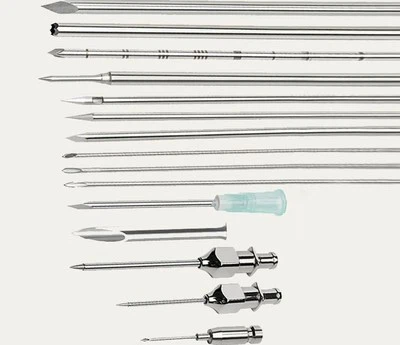
A Rigid Clinical Requirement: Veress Needles Fortifying The Safety Defenses Of Laparoscopic Surgery
Apr 20, 2026
A Rigid Clinical Requirement: Veress Needles Fortifying the Safety Defenses of Laparoscopic Surgery
Introduction: The Foundational Step in Minimally Invasive Surgery
In an era where minimally invasive procedures in general surgery, gynecology, and urology are ubiquitous, laparoscopic surgery has solidified its status as the mainstream clinical approach for low-trauma diagnosis and treatment. Within this sophisticated surgical ecosystem, the establishment of a pneumoperitoneum stands as the prerequisite and most critical initial step. The Veress Needle, a specialized core medical instrument, directly determines the safety of abdominal puncture and the stability of pneumoperitoneum formation. Bolstered by the professional mass production capabilities of regular, source-certified medical device manufacturers, these needles comprehensively mitigate high-risk intraoperative complications such as blind puncture bleeding, inadvertent organ injury, and gas leakage. Consequently, the Veress Needle has become an irreplaceable, fundamental consumable in laparoscopic minimally invasive surgeries across operating rooms of all levels.
Section 1: Precision Engineering for Optimal Access
Compliant medical device manufacturers have deeply immersed themselves in the field of minimally invasive surgical instruments. By intimately understanding the pain points of clinicians during the puncture process, they have engineered standardized Veress Needles that strictly adhere to rigorous clinical safety standards. The core functionality of the instrument is focused on the precise and safe puncture of the abdominal wall. It facilitates the rapid construction of a sealed and compliant peritoneal channel, allowing for the uniform and stable infusion of medical-grade carbon dioxide gas. This process evenly expands the abdominal cavity, creating a secure operational space and laying a robust foundation for subsequent procedures, including the insertion of the laparoscope, lesion exploration, targeted resection, and minimally invasive suturing.
Compared to traditional open surgical methods that require large incisions, high-quality, compliant Veress Needles, when used with standardized techniques, significantly reduce preoperative preparation time. They prevent the trauma associated with extensive subcutaneous tissue dissection, minimizing intraoperative blood loss at the source. This makes them perfectly aligned with the high-volume, batch surgical reception schedules common in modern hospitals.
Section 2: Clinical Advantages and Enhanced Patient Recovery
From a clinical perspective, Veress Needles produced by premium manufacturers amplify the core value of minimally invasive treatment. The puncture wound is exquisitely small, often requiring no extensive suturing or elaborate dressing, which dramatically accelerates the healing process for the patient's abdominal wall. This results in a significantly shortened hospitalization and rehabilitation cycle. Furthermore, by minimizing postoperative discomfort such as persistent abdominal distension and pulling pain, these instruments align perfectly with the new clinical concepts of Enhanced Recovery After Surgery (ERAS).
These needles are also versatile enough to accommodate special patient populations, including obese individuals, those with unique abdominal anatomical structures, and elderly patients with weaker tolerance levels. They fit seamlessly into the efficient throughput model of daytime minimally invasive laparoscopic surgeries, helping departments maximize bed utilization and improve the overall efficacy of diagnostic and therapeutic services.
Section 3: Universal Adaptability and Operational Efficiency
A core practical advantage of compliant Veress Needles is their universal adaptability across multiple surgical departments, which is also the primary focus of standardized mass production by manufacturers. This instrument can be seamlessly integrated into routine general surgical procedures like minimally invasive cholecystectomy and gastrointestinal laparoscopy. It fully covers gynecological endoscopic projects related to the ovaries and uterus, as well as urological laparoscopic interventions. This "one-tool-fits-all" capability eliminates the need for multiple specialized instruments, effectively streamlining the inventory of minimally invasive equipment in the operating room and reducing the comprehensive costs associated with storage management and instrument maintenance.
Conclusion: A Benchmark for Compliance and Safety
Every batch of finished products from regular manufacturers is accompanied by clinical compatibility test reports, sterile certification, and intraoperative safety verification records. This ensures full lifecycle traceability and clarity of responsibility, meeting the clinical access standards for tertiary Grade-A hospitals, county-level general hospitals, and specialized minimally invasive institutions alike. The Veress Needle is not just a tool but a benchmark for safety and compliance in the modern minimally invasive surgical theater.