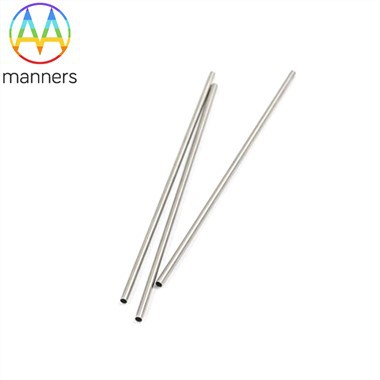
316LVM Hypotube: The Gold Standard For Implantable Medical Devices
Sep 08, 2026
Pain Points in Implantable Device Materials
Medical device engineers developing long‑term implants such as vascular stents, heart valves, or orthopedic anchors face a persistent challenge: finding a material that combines excellent corrosion resistance, high biocompatibility, and sufficient mechanical strength. Traditional 304 stainless steel, while strong, may release trace amounts of nickel and chromium ions over time, potentially causing sensitization or inflammation. In blood‑contact applications, even minor surface imperfections can trigger thrombogenicity. Furthermore, the trend toward minimally invasive delivery requires shafts that are both pushable and flexible, yet capable of withstanding complex laser‑cut patterns without losing structural integrity. The lack of a reliable, implant‑grade hypotube that meets both ISO 13485 and ASTM F138 standards often leads to costly redesigns and delays in clinical translation.
Principle of 316LVM Hypotube Performance
316LVM (Low Carbon Vacuum Melted) stainless steel is a premium variant of 316L, produced through vacuum arc remelting (VAR) or electroslag remelting (ESR). This process reduces impurities, non‑metallic inclusions, and carbon content, resulting in a homogenous microstructure with superior corrosion resistance and fatigue life. The "VM" designation ensures the material meets the stringent requirements of ASTM F138/F139 for surgical implants. When drawn into a hypotube (outer diameters from 0.20 mm to 20 mm), 316LVM offers an optimal balance of tensile strength (≥ 485 MPa) and elongation. Laser cutting introduces patterns that locally modify flexibility while preserving the tube's inherent torque transmission. The narrow kerf width (minimum 0.012 mm) achievable with modern pulsed fiber lasers allows for intricate geometries without compromising the passive chromium‑rich oxide layer that gives 316LVM its legendary biocompatibility.
Classification of Laser Cutting Equipment for 316LVM
Processing 316LVM hypotube demands lasers that minimize heat‑affected zones (HAZ) to prevent sensitization. The primary equipment categories are:
Pulsed Fiber Lasers (20–100 W): Ideal for cutting walls up to 0.5 mm; offer excellent beam quality and absorption at 1064 nm.
Picosecond/Femtosecond Ultra‑fast Lasers: Provide "cold ablation" with negligible HAZ, perfect for ultra‑thin‑walled tubes (OD < 1 mm) and complex bespoke patterns.
CO₂ Lasers: Rarely used for 316LVM due to poor absorption, but sometimes employed for post‑cut annealing.
Motion systems include high‑precision rotary stages with runout < 1 µm and linear stages with nanometer resolution. Vision alignment systems ensure pattern accuracy, while coaxial assist gas (nitrogen or argon) prevents oxidation during cutting.
Practical Operation Guide
To laser‑cut a 316LVM hypotube, begin by importing the 2D/3D drawing into CAD/CAM software. Select a pulsed fiber laser with a spot size matching the desired 0.012 mm kerf. Clean the tube in an ultrasonic bath to remove oils. Secure it in a precision collet on the rotary axis. Set parameters: pulse energy 0.1–0.5 mJ, repetition rate 50–200 kHz, cutting speed 200–400 mm/s. Use nitrogen assist gas at 15 bar. Perform a test cut on a scrap segment and inspect under a microscope for dross and recast. After full production, electropolish the parts to remove micro‑burrs and enhance the passive layer. Finally, passivate per ASTM A967 using citric acid. Document all steps for ISO 13485 traceability.
Real‑World Experience
Our factory has supplied 316LVM hypotubes for cardiovascular stent delivery systems. In one project, a client required a shaft that could navigate tortuous coronary anatomy without kinking. We used an interrupted spiral cut pattern with variable pitch, achieving a 35 % improvement in torque response compared to a solid tube. A critical lesson learned was the importance of vacuum‑melted material: a batch of non‑VM 316L showed micro‑inclusions that caused laser‑cut irregularities. Switching to certified 316LVM eliminated the issue. We also found that electropolishing with a balanced phosphoric‑sulfuric electrolyte reduced surface roughness to Ra < 0.05 µm, significantly lowering thrombogenicity in vitro. These experiences underscore the necessity of material traceability and rigorous post‑processing.
Summary and Sublimation
The 316LVM hypotube is more than a component; it is a testament to the synergy between metallurgy and precision engineering. Its ability to be transformed from a simple drawn tube into a life‑saving implantable structure exemplifies the pinnacle of medical device innovation. By overcoming the inherent challenges of corrosion and biocompatibility, engineers can focus on what truly matters: improving patient outcomes. The hypotube's journey from raw vacuum‑melted ingot to a laser‑cut, implant‑ready device reflects the relentless pursuit of excellence that defines modern healthcare.
Future Prospects and Recommendations
Looking ahead, the demand for 316LVM hypotubes will grow in structural heart and neurovascular applications. We recommend investing in ultra‑fast laser technology to achieve sub‑micron features and exploring hybrid manufacturing that combines laser cutting with 3D‑printed markers. Manufacturers should pursue ISO 13485:2016 certification and engage in early supplier qualification to ensure material consistency. Additionally, adopting digital twin simulations for pattern optimization will reduce prototyping cycles. As personalized medicine expands, the ability to rapidly produce patient‑specific 316LVM hypotubes will become a competitive edge. Ultimately, this material will continue to set the benchmark for implantable medical devices.